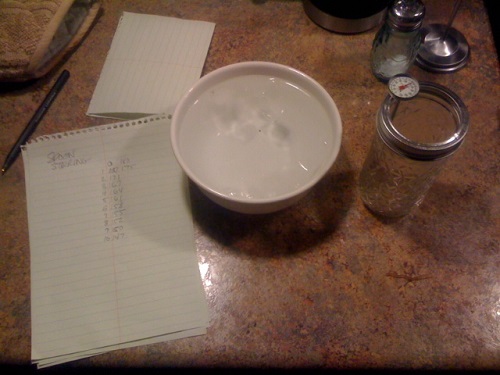
Writing up the evaporative cooling post on cold atom techniques, I used the standard analogy that people in the field use for describing the process: cooling an atomic vapor to BEC is like the cooling of a cup of coffee, where the hottest component particles manage to escape the system of interest, and what’s left… Continue reading Bose Condensation of Coffee?
Tools of the Cold-Atom Trade: Evaporative Cooling
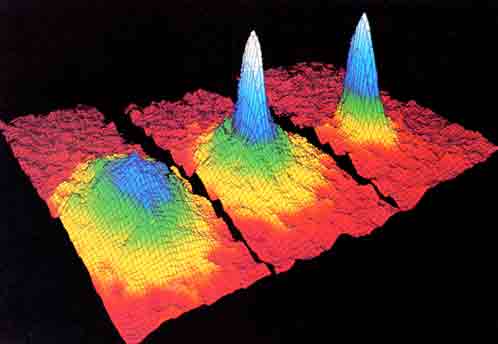
In our last installment of the cold-atom toolbox series, we talked about why you need magnetic traps to get to really ultra-cold samples– because the light scattering involved in laser cooling limits you to a temperature that’s too high for making Bose-Einstein condensation (BEC). This time out, we’ll talk about how you actually get to… Continue reading Tools of the Cold-Atom Trade: Evaporative Cooling
A Pox on Both Your Cultures
A lot has been written about Steven Pinker’s article about “scientism,” most of it mocking his grandiose overreach in passages like this: These thinkers—Descartes, Spinoza, Hobbes, Locke, Hume, Rousseau, Leibniz, Kant, Smith—are all the more remarkable for having crafted their ideas in the absence of formal theory and empirical data. The mathematical theories of information,… Continue reading A Pox on Both Your Cultures
Tools of the Cold-Atom Trade: Magnetic Traps
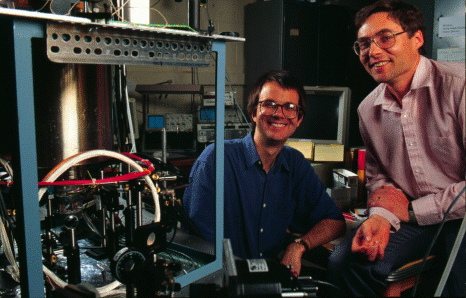
We’re getting toward the end of the cold-atom technologies in my original list, but that doesn’t mean we’re scraping the bottom of the barrel. On the contrary, the remaining tools are among the most important for producing and studying truly ultra-cold atoms. Wait, isn’t what we’ve been talking about cold enough? There is, as always,… Continue reading Tools of the Cold-Atom Trade: Magnetic Traps
Tools of the Cold-Atom Trade: Magneto-Optical Traps
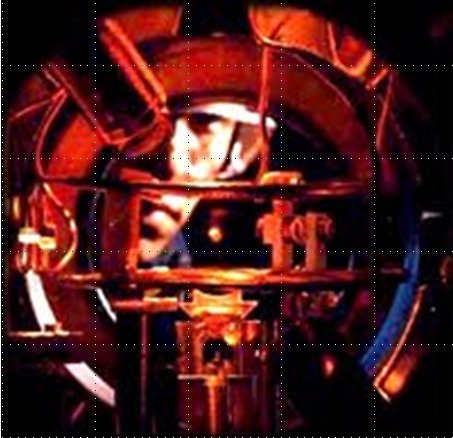
Today’s dip into the cold-atom toolbox is to explain the real workhorse of cold-atom physics, the magneto-optical trap. This is the technology that really makes laser cooling useful, by letting you collect massive numbers of atoms at very low temperatures and moderate density. Wait a minute, I thought we already had that, with optical molasses?… Continue reading Tools of the Cold-Atom Trade: Magneto-Optical Traps
Technology Is Science, Too
Via a retweeted link from Thony C. on Twitter, I ran across a blog post declaring science a “bourgeois pastime.” The argument, attributed to a book by Dierdre McCloskey is that rather than being at the root of economic progress, scientific advances are a by-product of economic advances. As society got more wealthy, it was… Continue reading Technology Is Science, Too
White People Only Have 2.8 Friends

There was some buzz Thursday about a poll showing that 40% of white people don’t have any friends of a different race. Ipsos/Reuters include a spiffy “data explorer” where you can make graphs like the one above. It does not appear to provide an easy way to get at the actual wording of the question,… Continue reading White People Only Have 2.8 Friends
Tools of the Cold-Atom Trade: Optical Pumping and Sisyphus Cooling

This topic is an addition to the original list in the introductory post for the series, because I had thought I could deal with it in one of the other entries. Really, though, it deserves its own installment because of its important role in the history of laser cooling. Laser cooling would not be as… Continue reading Tools of the Cold-Atom Trade: Optical Pumping and Sisyphus Cooling
260 Weeks

Long-time readers will remember that I used to do weekly kid-blogging, posting pictures of SteelyKid with a reference animal, Appa the sky-bison from the Avatar cartoon. I stopped a couple of years ago, because SteelyKid started being reluctant to pose for the pictures every week. I got her to pose for a few yesterday, though,… Continue reading 260 Weeks
Why Do Small Science?

I spent an hour or so on Skype with a former student on Tuesday, talking about how physics is done in the CMS collaboration at the Large Hadron Collider. It’s always fascinating to get a look at a completely different way of doing science– as I said when I explained my questions, the longest author… Continue reading Why Do Small Science?