One of the things that’s been rattling around in my head since ScienceOnline back in January is the need for a greater diversity of voices in science communication generally. I don’t mean diversity in the sense of racial and gender make-up of the people doing the communication, though that would be nice, I mean a… Continue reading Science In Different Voices
Author: Chad Orzel
Be Your Boring Self
In rapid succession yesterday, Twitter threw me two how-to-behave-online links that kind of rubbed me the wrong way. The first was a widely re-shared essay titled You Are Boring: You listen to the same five podcasts and read the same seven blogs as all your pals. You stay up late on Twitter making hashtagged jokes… Continue reading Be Your Boring Self
The Theoretical Minimum by Leonard Susskind and George Hrabovsky
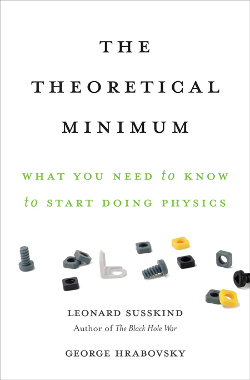
This is the physics book that’s generating the most buzz just at the moment, by noted string theorist Leonard Susskind and George Hrabovsky, based on a general-audience course Susskind’s been running for years. It’s doing very well, with an Amazon rank in the 300’s, which is kind of remarkable for a book with this many… Continue reading The Theoretical Minimum by Leonard Susskind and George Hrabovsky
Deficit Models, Bureaucratic Empathy, and Work-Life Juggling
Every now and then, I run across a couple of items that tie together a whole bunch of different issues that weigh heavily on my mind. That happened yesterday courtesy of Timothy Burke, whose blog post about an NPR story is so good that there aren’t enough +1 buttons on the entire Internet for it.… Continue reading Deficit Models, Bureaucratic Empathy, and Work-Life Juggling
Other Scientists and “The Public”
Over in Twitter-land, Ben Lillie of the Story Collider asked an interesting question, which sparked some discussion that he’s Storified on a Tumblr blog (just in case the date stamp wasn’t enough to mark this as 2013…). The original question was: Partly I’m wondering if there is a reason to have an event series for… Continue reading Other Scientists and “The Public”
Help Wanted: Adjunct Physics Faculty
We’ve got calls out to the local grad programs, and I’ve mentioned this on Twitter a couple of times, but it can’t hurt anything to post it here as well: we’ve got a huge overabundance of first-year engineering students that is forcing us to open extra sections of our intro physics classes to accommodate them.… Continue reading Help Wanted: Adjunct Physics Faculty
Direct and Indirect Heating: Why Don’t Power Plants Change Local Climate?
This past weekend, I was at Boskone, where I appeared on a few science-y panels. One of these was on the possibility of beaming power down from space: Energy From Space Beam me down some juice, Scotty? Let’s talk about the possibilities — and practicalities — of really long-distance power transmission. Tom Easton (M), Jordin… Continue reading Direct and Indirect Heating: Why Don’t Power Plants Change Local Climate?
Physics Is For Eternal Five-Year-Olds
Yesterday’s post about differences between intro physics and chemistry sparked an interesting discussion in comments that I didn’t have time to participate in. Sigh. Anyway, a question that came up in there was why we have physicists teach intro physics courses that are primarily designed to serve other departments. It’s a good question, and in… Continue reading Physics Is For Eternal Five-Year-Olds
Physics vs. Chemistry: Nobody Does Research on Newtonian Mechanics
Not long ago, I had a meeting with the Dean, who is a chemist. One of the things I talked about was my plan for distributing teaching assignments in the next few years, which ran into an interesting cultural difference. I explained how I was trying to make the distribution of assignments a little more… Continue reading Physics vs. Chemistry: Nobody Does Research on Newtonian Mechanics
“The Big Bang Theory” and Social Science
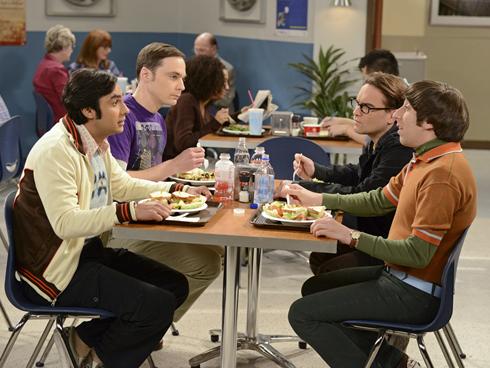
I found myself writing about the social skills of scientists today for the book-in-progress (something I’ve done here before), and how they’re portrayed in the media, so of course I had to drop in a reference to “The Big Bang Theory.” Jim Parsons’s portrayal of Sheldon Cooper pretty much nails down one of the extremes… Continue reading “The Big Bang Theory” and Social Science