One of my colleagues at Union is doing a physics education research project with a summer student, and is using an online survey to collect data. Obviously, the more people respond to the survey, the more scientific it becomes (subject to the limitations imposed by relying on self-selected Internet samples, of course), so I offered… Continue reading Physics Research Survey and Contest
Author: Chad Orzel
Physics of the Bouncy-Bounce

SteelyPalooza came off very well, despite high disaster potential. We were, after all, inviting a dozen five-year-olds plus assorted siblings to our house, on a day when Kate and The Pip were out of commission due to coxsackie virus. Everything went smoothly, though: the kids loved the bouncy-bounce, SteelyKid’s playset and playhouse, and the six-person… Continue reading Physics of the Bouncy-Bounce
SteelyPalooza!

SteelyKid turns five next Wednesday (F/X: “FIVE! YEARS!” like an incredulous Jeremy Piven in Grosse Point Blank), but we’re having her party today. This is a distinction we’ve worked hard to get across, and I expect to hear her explain to other kids and their parents about 39 times today (“It’s not my birthday today,… Continue reading SteelyPalooza!
Dorky Poll: Document Preparation Software
The Pip is home with coxsackie virus today, and we’re having a big party for SteelyKid tomorrow (her fifth birthday is next week), so I’m too busy to do more cold-atom blogging today. So instead, we’ll consider one of the great linguistic conundra of modern physics: The document preparation system LaTeX is pronounced: This is… Continue reading Dorky Poll: Document Preparation Software
We Need Scientific Thinking, Not Scientific Commentary
Thursday’s tempest-in-a-teapot was kicked off by an interview with Dan Vergano in which he suggests science reporting is a “ghetto:” The idea, and it comes from the redoubtable Tom Hayden, is that science reporting has largely become a secret garden walled off, and walling itself off, from the rest of the world. Instead of reporting… Continue reading We Need Scientific Thinking, Not Scientific Commentary
Tools of the Cold-Atom Trade: Light Shifts and Optical Dipole Traps
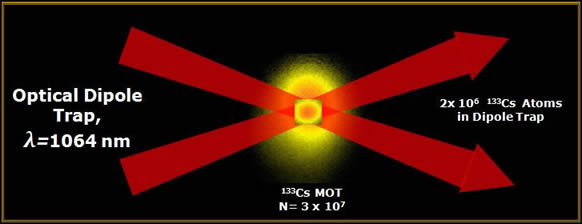
The last post in this series on the core technologies of cold-atom physics dealt with optical molasses, where you use the scattering of light to exert forces on atoms to make them very, very cold. It turns out, they end up even colder than the simple theory would lead you to expect, which is very… Continue reading Tools of the Cold-Atom Trade: Light Shifts and Optical Dipole Traps
Tools of the Cold-Atom Trade: Optical Molasses

`Once upon a time there were three little sisters,’ the Dormouse began in a great hurry; `and their names were Elsie, Lacie, and Tillie; and they lived at the bottom of a well–‘ `What did they live on?’ said Alice, who always took a great interest in questions of eating and drinking. `They lived on… Continue reading Tools of the Cold-Atom Trade: Optical Molasses
Balance, Productivity, and Temper
It’s been a few days since I did a work-life balance whine, but it’s not like I’m not thinking about it. The problem for the moment is the psychology of trying to be productive in limited time. Specifically, while I know intellectually that I need to be efficient in working, and make the most of… Continue reading Balance, Productivity, and Temper
Tools of the Cold-Atom Trade: Light Scattering Forces and Slow Atomic Beams
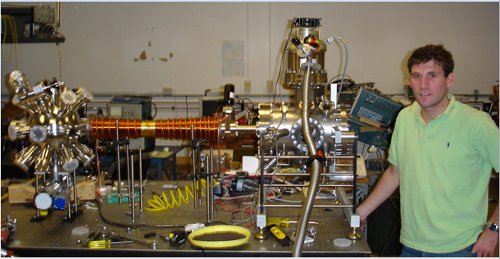
This series of posts is intended to explain the tools and tricks used to create and manipulate samples of ultra-cold atoms; thus, it’s appropriate to start with how we get those atoms in the first place. This will be a very quick background on the basic force used to make atoms cold, and then the… Continue reading Tools of the Cold-Atom Trade: Light Scattering Forces and Slow Atomic Beams
Tools of the Cold-Atom Trade: Introduction
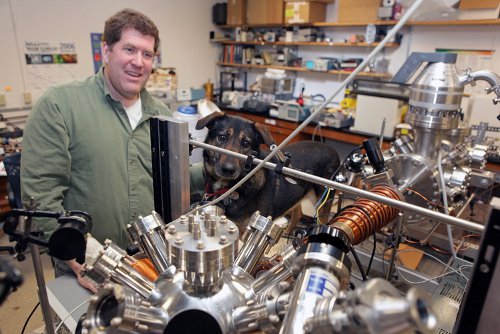
I have a small collection of recent research papers that I’d like to write up open in various browser tabs and suchlike, but many of these would benefit from having some relatively clear and compact explanations of the underlying techniques. And while I can either dig up some old posts, or Google somebody else’s, it’s… Continue reading Tools of the Cold-Atom Trade: Introduction