I’m writing a bit for the book-in-progress about neutrinos– prompted by a forthcoming book by Ray Jaywardhana that I was sent for review– and in looking for material, I ran across a great quote from Arthur Stanley Eddington, the British astronomer and science popularizer best known for his eclipse observations that confirmed the bending of… Continue reading Eddington, Neutrinos, and the Changing of Meaning by Context
Author: Chad Orzel
Point Sources and Towers: “Multiaxis Inertial Sensing with Long-Time Point Source Atom Interferometry”
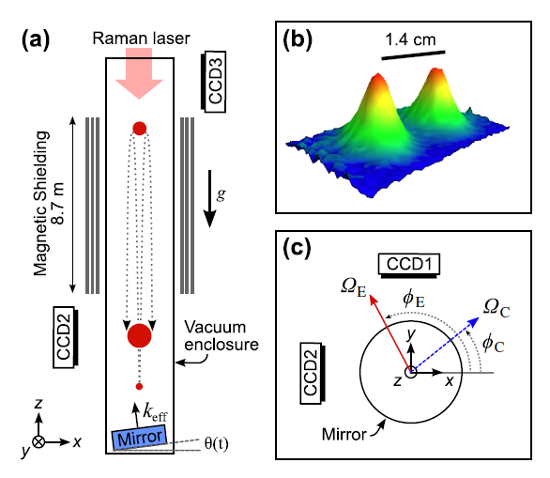
A little over a year ago, I visited Mark Kasevich’s labs at Stanford, and wrote up a paper proposing to use a 10-m atom interferometer to test general relativity. Now, that sounds crazy, but I saw the actual tower when I visited, so it wasn’t complete nonsense. And this week, they have a new paper… Continue reading Point Sources and Towers: “Multiaxis Inertial Sensing with Long-Time Point Source Atom Interferometry”
Laser-Cooled Atoms: Rubidium
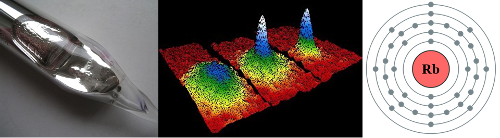
Element: Rubidium (Rb) Atomic Number: 37 Mass: two “stable” isotopes, 85 and 87 amu (rubidium-87 is technically radioactive, but it’s half-life is 48 billion years, so it might as well be stable for atomic physics purposes. Laser cooling wavelength: 780 nm Doppler cooling limit: 140 μK Chemical classification: Alkali metal, column I of the periodic… Continue reading Laser-Cooled Atoms: Rubidium
Laser-Cooled Atoms: Sodium
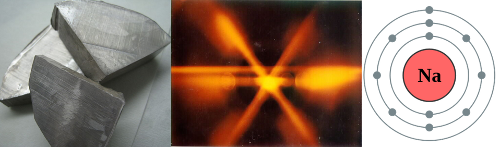
Element: Sodium (Na) Atomic Number: 11 Mass: one stable isotope, 23 amu Laser cooling wavelength: 589 nm Doppler cooling limit: 240 μK Chemical classification: Alkali metal, column I of the periodic table. Like the majority of elements, it’s a greyish metal at room temperature. Like the other alkalis, it’s highly reactive, and bursts into flame… Continue reading Laser-Cooled Atoms: Sodium
Know Your Laser-Cooled Atoms
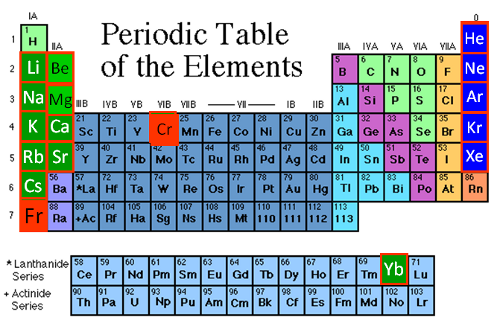
At the tail end of the cold-atom toolbox series, I joked about doing a “trading card” version shortening the posts to a more web-friendly length. In idly thinking about this, though, it occurred to me that if one were going to have cold-atom trading cards, it might make more sense to have them for the… Continue reading Know Your Laser-Cooled Atoms
Reading Begins With Siblings

The “featured image” above shows SteelyKid and The Pip checking out a couple of books at The Open Door during our weekly trip to the Schenectady Greenmarket. As cute as this is, though, the image can’t do justice to the full scenario. We were in the toy section looking for a birthday present for SteelyKid’s… Continue reading Reading Begins With Siblings
Santa Claus Doesn’t Live Here Any More

SteelyKid: I din’t eat all my lunch today, because I didn’t have time. Daddy: Uh-huh. SK: It’s true! I’m not even lying. D: Oh, I believe you didn’t eat all your lunch, don’t worry about that. SK: Ask Santa Claus if you think I’m lying. D: Santa Claus? SK: Yeah. Santa Claus actually can’t see… Continue reading Santa Claus Doesn’t Live Here Any More
Tools of the Cold-Atom Trade: Atom Detection and Imaging
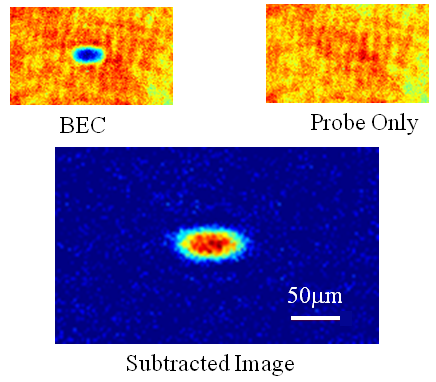
This is probably the last trip into the cold atom toolbox, unless I think of something else while I’m writing it. But don’t make the mistake of assuming it’s an afterthought– far from it. In some ways, today’s topic is the most important, because it covers the ways that we study the atoms once we… Continue reading Tools of the Cold-Atom Trade: Atom Detection and Imaging
Bose Condensation of Coffee?
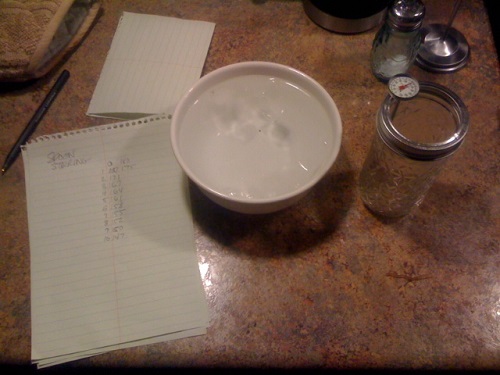
Writing up the evaporative cooling post on cold atom techniques, I used the standard analogy that people in the field use for describing the process: cooling an atomic vapor to BEC is like the cooling of a cup of coffee, where the hottest component particles manage to escape the system of interest, and what’s left… Continue reading Bose Condensation of Coffee?
Tools of the Cold-Atom Trade: Evaporative Cooling
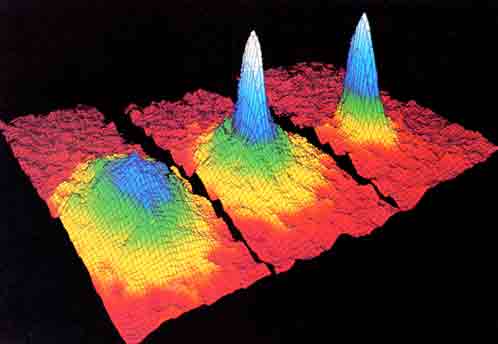
In our last installment of the cold-atom toolbox series, we talked about why you need magnetic traps to get to really ultra-cold samples– because the light scattering involved in laser cooling limits you to a temperature that’s too high for making Bose-Einstein condensation (BEC). This time out, we’ll talk about how you actually get to… Continue reading Tools of the Cold-Atom Trade: Evaporative Cooling