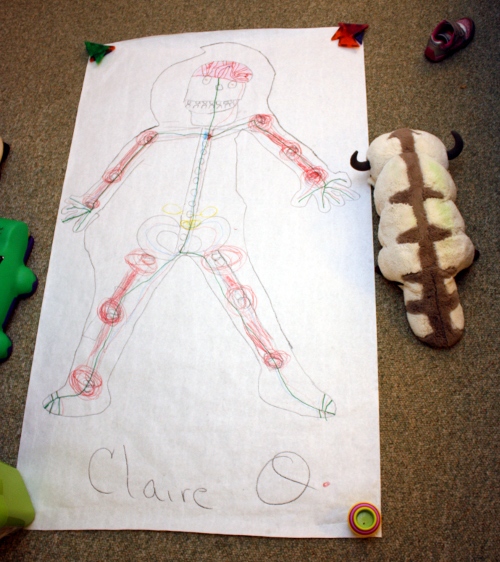
It’s been a rough week, so here’s some cute-kid stuff. The “featured image” above is a giant picture from SteelyKid’s after-school day care, where they’re talking about bodies and bones. It’s a tracing of her outline, filled in with her drawings of bones, joints, a grinning skull, a brain, blood vessels, a spine, and what… Continue reading SteelyKid, Life Scientist
Author: Chad Orzel
Optics Question: How Did the Photographer Do That?
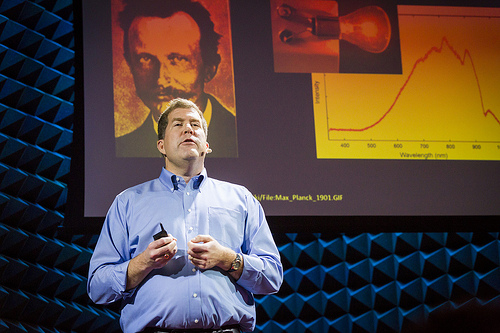
Yes, that’s another TED@NYC picture as the “featured image,” but don’t run away! It’s a post about science, I swear! The photo up above is from the Flickr set (which, by the way, has been edited significantly since yesterday…), and I like it a good deal. Mostly because, as the joking caption suggests, that photo… Continue reading Optics Question: How Did the Photographer Do That?
Blogging Used to Be Punk Rock, Man
There’s a sense in which the saddest true statement I’ve read about the unpleasant events of the past week is this: Blog editor at Scientific American is a position of great power, with the ability to make or break careers. I’m not disputing the truth of this. It’s absolutely true that the position has enormous… Continue reading Blogging Used to Be Punk Rock, Man
Wrong, Wrong, Wrong
Let me say these things, because they are important. Bora was wrong. Scientific American was wrong. Ofek was wrong, Wrong, WRONG. If you follow science blogs beyond this one, you have no doubt run across the gigantic debacle that erupted this past weekend; if not the first few paragraphs of this Slate piece give a… Continue reading Wrong, Wrong, Wrong
Old Thesis Club: Secondary Emission of Electrons from Molybdenum, by H.A. Smith, 1928
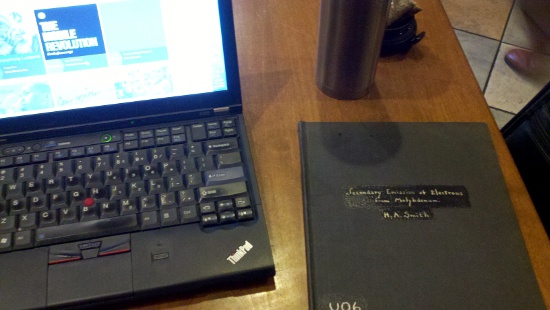
As noted in a previous post on Monte Carlo simulation in 1960, we recently came into possession of a large box of old Master’s theses. The bulk of these are from the 50’s and 60’s, but there are some going back much farther. As I pass these every day I’m in the office, I thought… Continue reading Old Thesis Club: Secondary Emission of Electrons from Molybdenum, by H.A. Smith, 1928
Quantum Viruses?
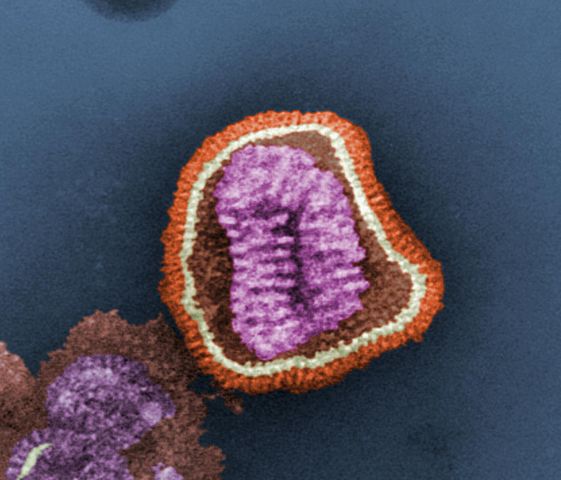
The Twitter conversation that prompted yesterday’s post about composite objects was apparently prompted by a comment somebody made about how a virus left alone would see its quantum wavefunction spread out on a time scale of minutes. This led to wondering about whether a virus could really be considered a particle that would move as… Continue reading Quantum Viruses?
Life Scientists vs. Test Takers
Back in July, Physics Today ran an article on Reinventing physics for life-sciences majors (I couldn’t find an un-paywalled version, but this arxiv preprint seems to be close to it). As I’ve had some bad experiences with that class, I flagged it as something to read, but only got around to it last night. The… Continue reading Life Scientists vs. Test Takers
Supreme Leader of Quantumland
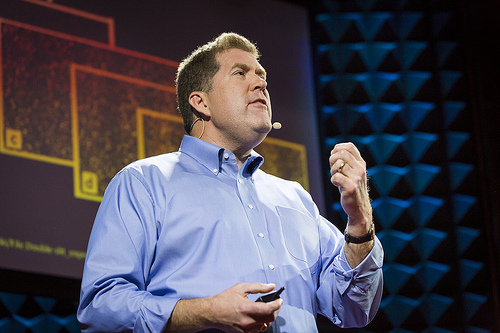
The nice folks at TED have put up a giant Flickr set of pictures from last week’s event. I’m not sure it’s complete, but I happened to notice it this morning, and it already had several pictures of me in it, which is all I really care about. I particularly like the “featured image” above,… Continue reading Supreme Leader of Quantumland
Favorite Quantum Physics in Science Fiction?
I’m doing a bit of work on an idea for physics outreach, which would involve tying a discussion of modern physics to science fiction stories. I have Opinions about this sort of thing, of course, but I also have readers who might think of things I don’t. So, let me throw this out to you… Continue reading Favorite Quantum Physics in Science Fiction?
When Is a Composite Object a Particle?
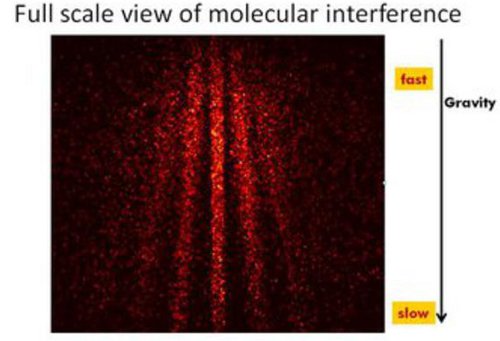
Through some kind of weird synchronicity, the title question came up twice yesterday, once in a comment to my TED@NYC talk post, and the second time on Twitter, in a conversation with a person whose account is protected, thus rendering it un-link-able. Trust me. The question is one of those things that you don’t necessarily… Continue reading When Is a Composite Object a Particle?